

Measuring the Value of Design in Singapore

New data and an impact framework support design adoption in Singapore with evidence of its value for organisations.
Why the value of design matters
As a catalyst for transformation, design delivers tangible and intangible benefits. Beyond aesthetics, design can improve quality of life, enable sustainable growth, and advance societal progress.
Such impacts have until now been under-recognised in Singapore. That’s because design is often embedded in diverse ecosystems of business and service, making its specific value challenging to articulate. When visibility of design’s value is lacking, opportunities for design-led innovation can be missed.
A new language for design in Singapore
Seeking compelling hard data on the impact of design, the DesignSingapore Council (Dsg) commissioned methodology study “Measuring the Value of Design in Singapore” (2025), which is now available for download as a report.
Conducted by Desire Lines and Oxford Economics, the study provides tools and data that foster a shared understanding of design’s value and guide the adoption of design. It enables designers and business leaders to speak with the same language about the value of design investments.
Design Impact Framework
Central to the study was the development of the Design Impact Framework. This first-of-its-kind tool in Singapore serves multiple purposes:
- corporate reporting;
- impact measurement for designers; and
- supporting policymaking, programme design, evaluation, and public communication.
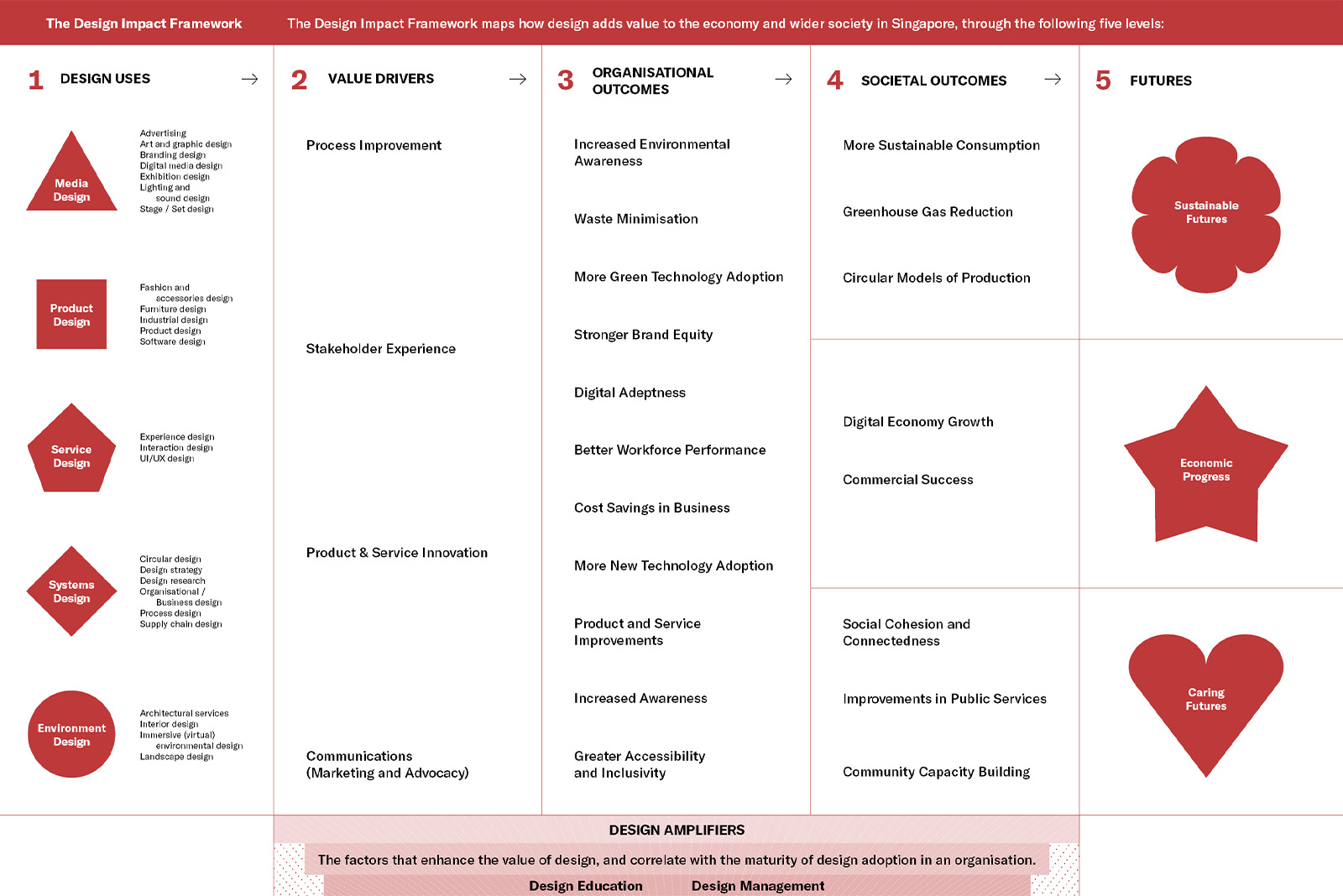
In its ‘reversed’ format, the Design Impact Framework maps pathways between outcomes and uses of design.
The adaptable framework can be used to trace the outputs and outcomes that flow from design activities, or chart design’s input to future objectives. It supports the development of project-specific design metrics that can be tracked over time to assess the effectiveness of design initiatives.
To kickstart the impact-assessment journey, detailed but non-exhaustive impact pathways are provided for each of five design use categories.
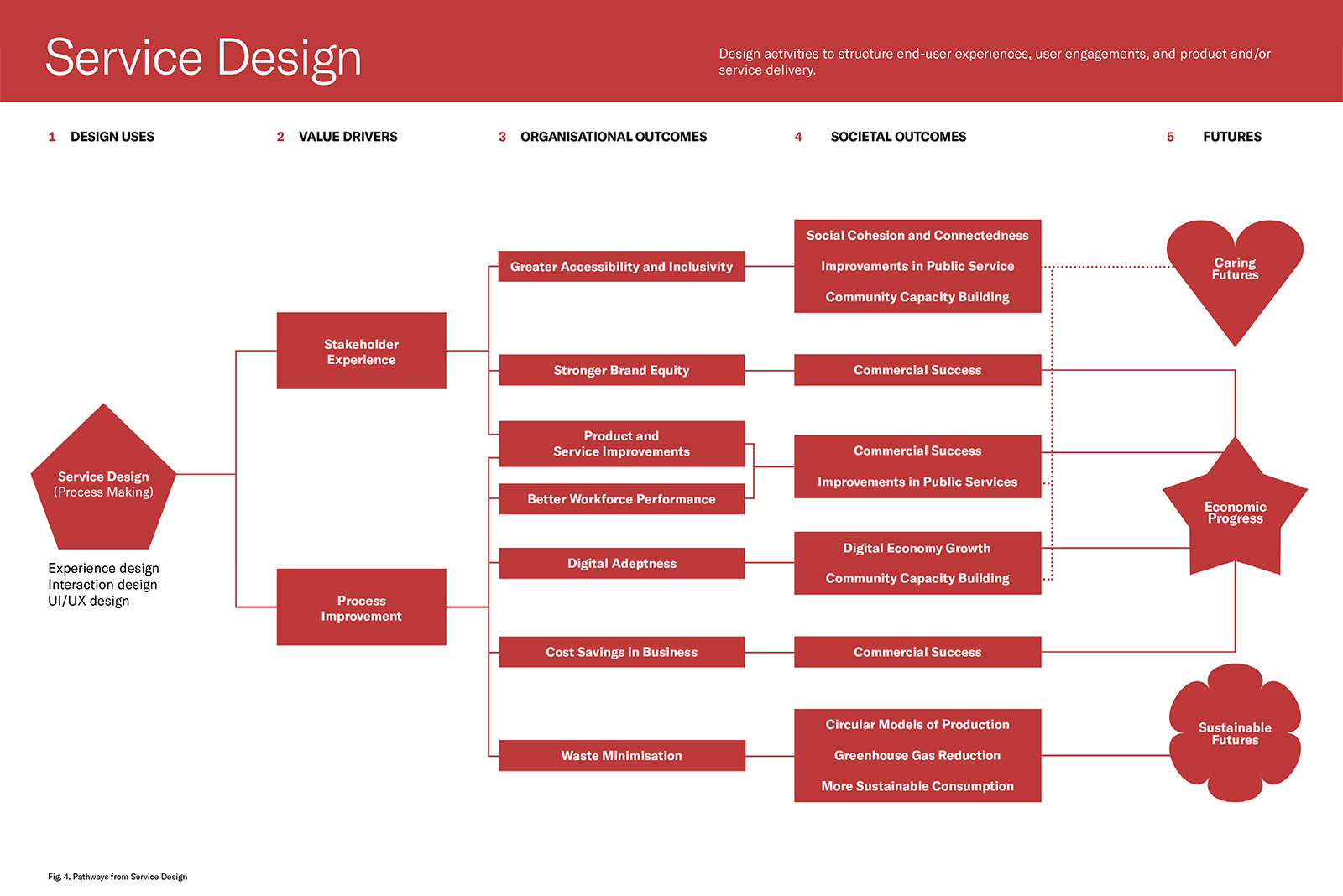
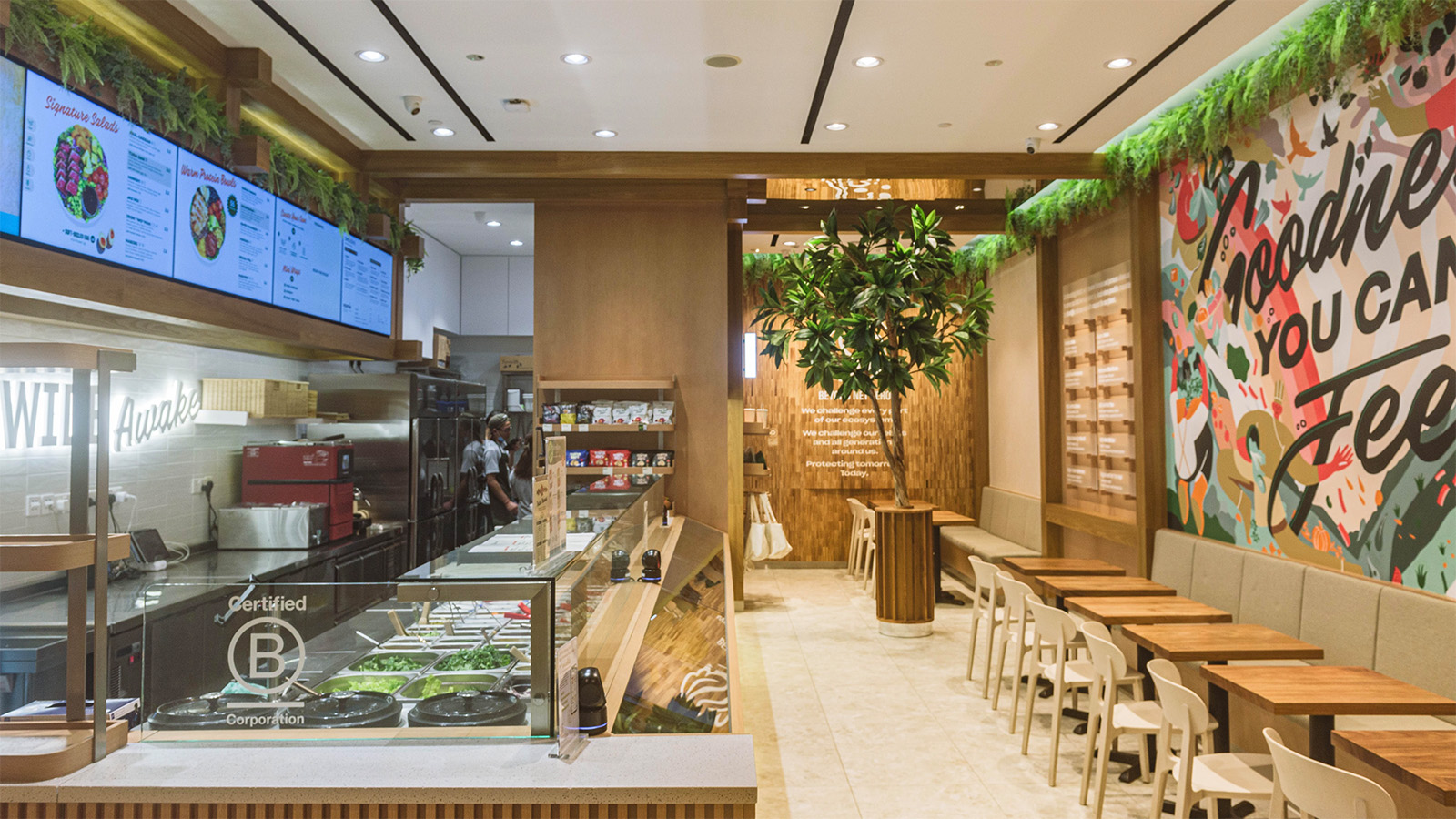
The report also provides six case studies that illustrate the practical application of the Design Impact Framework to Singapore-based businesses. Discover how design has positively impacted businesses such as SaladStop!, Changi General Hospital, and GINLEE by generating observable improvements to metrics including revenue and operational efficiency.
Design Use Value Survey
Singapore’s first Design Use Value Survey supplements the Design Impact Framework. It explored how 270 Singapore-based organisations adopted design, and the outcomes in the economic, environmental, and social domains.
The data reveals that design is a proven driver of business outcomes. It is being used widely as an investment that yields positive results. Its full value is unlocked through strategic integration across the business value chain.
Fast facts about the surveyed organisations:
- 90% reported positive outcomes from using design.
- Among those already using design, 77% have hired in-house designers and 71% have engaged external designers.
- The more mature use of design sees stronger outcomes.
- Beyond commercial benefits, design yielded high levels of impact on social and environmental goals.
The big footprint of impact
Oxford Economics estimates that the impact of design across Singapore’s economy is around five times the sector’s direct value-add. The Design Impact Framework is a crucial step taken by Dsg to address the long-standing challenge of measurement and bring design’s impact to light.
This is the underpinning of a future in which design is no longer invisible or overlooked, but consistently measured and celebrated, enabling design-led innovation and metric-based design impact to become the new norm.
Download the reportKeen to innovate your business with design research? Find out how Dsg’s Good Design Research (GDR) programme can help you make an impact on people, planet, and profit.
Discover GDR